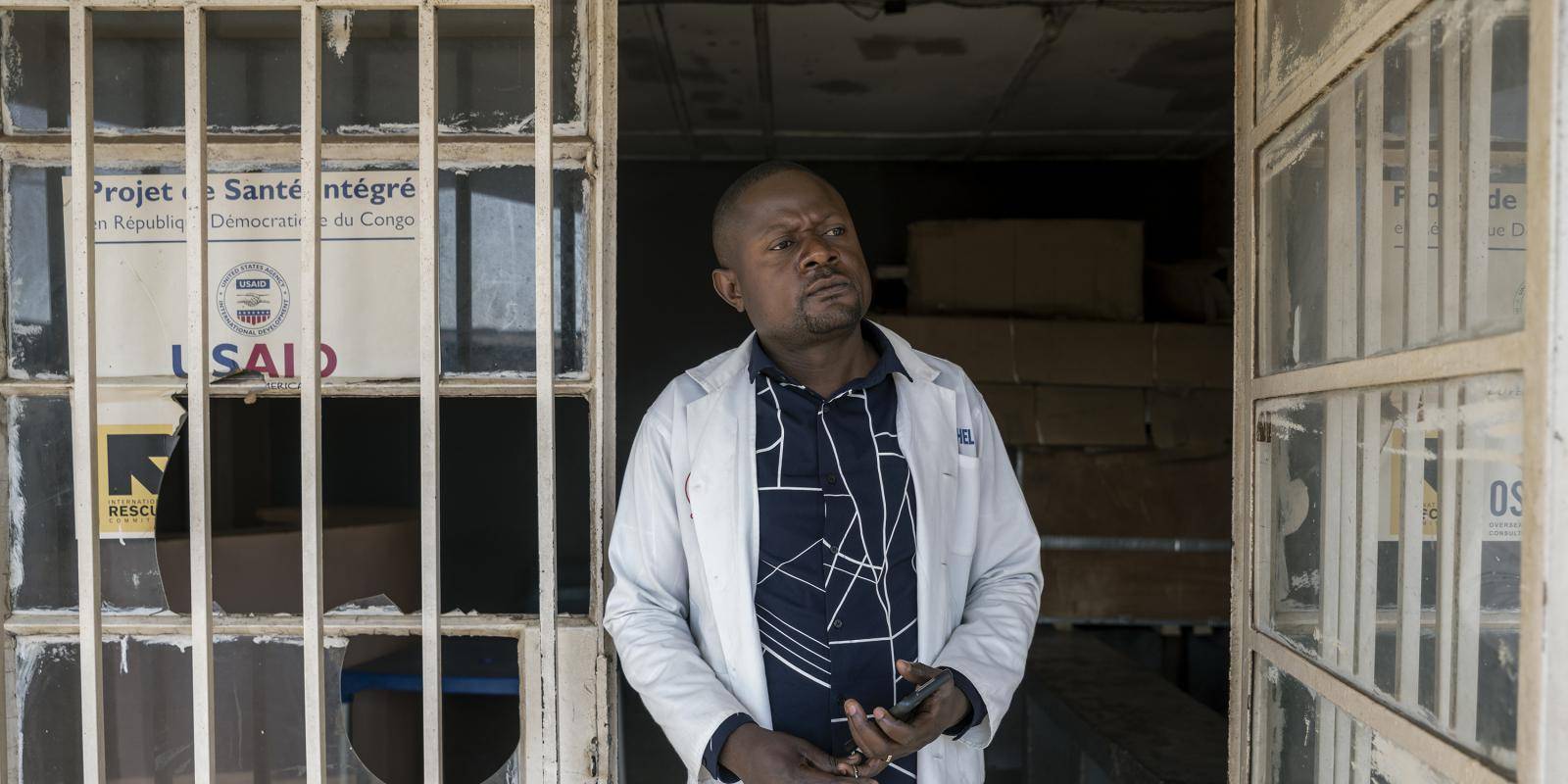

It has been nearly two months since the release of the long-anticipated America First Global Health Strategy (AFGHS), a document whose very title feels inconsistent – and exposes what many in the field have long understood: that global health, as practiced, has rarely been truly global. Rather it has often meant that a few countries and institutions have exerted overwhelming influence on the development and management of health policy and strategy in poorer countries.
The AFGHS reflects a clear logic of commercial diplomacy: using foreign assistance to advance American innovation abroad while reinforcing domestic economic interests. Roughly a quarter of its health funding is earmarked for commodities – diagnostics, medicines, and vaccines – with procurement preferences that privilege US-made products.
For Washington, this approach aligns health security with industrial competitiveness. For its partners in Africa and elsewhere, however, it risks hardening patterns of structural dependency precisely when they want to improve their own manufacturing and regulatory capacity.
Yet this challenge need not become a zero-sum equation. If negotiated strategically, the AFGHS could be part of a transitional compact – one that balances US industrial priorities with Africa’s long-term health security and economic sovereignty.
The good and the bad: Alignment in principle, retrenchment in practice
On the surface, the AFGHS call to reduce inefficiencies and improve accountability appears reasonable, even overdue. However, the mechanisms proposed often undercut that goal. The AFGHS leans heavily toward country-to-country deals while scaling back contributions to multilateral organizations that typically coordinate investments across diseases and regions.
This approach is particularly contradictory given that the diseases highlighted in the strategy – tuberculosis, HIV/AIDS, malaria, and polio – are precisely those for which multilateral platforms (such as the Global Fund and Gavi) have proven indispensable. Moreover, by focusing narrowly on these disease-specific programs, the strategy entrenches the vertical silos it critiques.
On one hand, the US decision to reduce reliance on large, international NGOs could, if properly managed, align with broader calls to boost local ownership of healthcare provision in poorer countries. On the other, the AFGHS reinforces a long-standing structural flaw in global health policy – the artificial separation between health security and health systems.
The AFGHS embodies a strategic contradiction: it affirms the principle of national ownership while simultaneously constraining it by seeking to dictate how poorer countries develop their health strategies and implement health programmes.
This approach treats health security elements such as disease surveillance, laboratory capacity, and stockpiling countermeasures like vaccines and personal protective equipment (PPE) as distinct technical functions rather than integral components of a functioning health system. That approach was proven inadequate during the COVID-19 pandemic, when several national health systems could detect threats but struggled to sustain a response or continue other essential health services.
In Africa – the main regional focus of the AFGHS – leaders are moving in the opposite direction, rallying behind the Lusaka Agenda and similar efforts to embed preparedness within healthcare systems.